
Dealing with a neighbor trespassing on your land, whether it involves property line issues or a neighbor’s dog digging up your yard, quickly disrupts your peace. If you are experiencing repeated unauthorized entry onto your property, your sense of personal space is severely compromised.
It is essential to protect your legal property boundary and your right to undisturbed enjoyment of your home. Addressing these frequent neighbor intrusions formally with a clear, concise letter is the most professional way to restore boundary respect and prevent larger conflicts.
This article is designed to guide you through drafting an effective trespassing complaint letter to your neighbor. We provide practical property line dispute resolution tips, helpful sample letters, and key insights on communicating your concerns over unauthorized use of property.
You will learn the best practices for expressing your need for boundary enforcement clearly while maintaining good neighborly relations. Our goal is to make the process of writing this crucial communication piece straightforward, leading to a successful resolution of your property encroachment problem.
A carefully worded neighbor complaint letter is a powerful tool for effective dispute resolution regarding your land. A clear and respectful request for them to cease trespassing ensures that your message about protecting your property boundaries is delivered without aggression.
By detailing the specific instances of unauthorized access and proposing a solution, this written record becomes the foundation for establishing property peace. A calm, firm written approach is key to achieving a positive outcome and securing your home’s perimeter against future trespassing incidents.
Complaint Letter To Neighbor About Trespassing
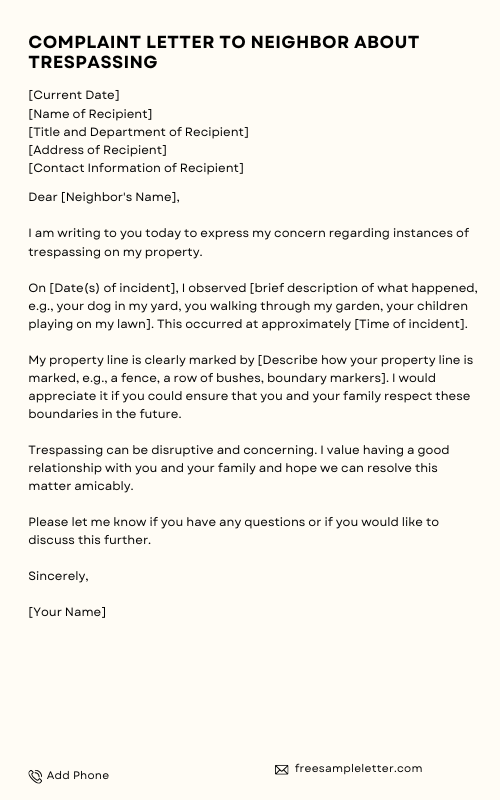
[Your Name]
[Your Address]
[Your Phone Number]
[Your Email Address]
[Date]
[Neighbor’s Name]
[Neighbor’s Address]
Dear [Neighbor’s Name],
I am writing to you today to express my concern regarding instances of trespassing on my property.
On [Date(s) of incident], I observed [brief description of what happened, e.g., your dog in my yard, you walking through my garden, your children playing on my lawn]. This occurred at approximately [Time of incident].
My property line is clearly marked by [Describe how your property line is marked, e.g., a fence, a row of bushes, boundary markers]. I would appreciate it if you could ensure that you and your family respect these boundaries in the future.
Trespassing can be disruptive and concerning. I value having a good relationship with you and your family and hope we can resolve this matter amicably.
Please let me know if you have any questions or if you would like to discuss this further.
Sincerely,
[Your Name]
How to Write Complaint Letter To Neighbor About Trespassing
1. Spotting the Signs and Gathering Evidence
So, your neighbor’s been treating your yard like a shortcut? Or perhaps their dog is frequently using your prize-winning petunias as a toilet. First things first: You need to gather evidence. This isn’t about being petty; it’s about building a solid case. Keep a detailed record of each instance of trespassing. Note the date, time, and what exactly happened. Did they walk across your lawn? Did their kids leave toys? Did their cat decide your porch was the perfect sunbathing spot?
Photos and videos are your best friends. A picture is worth a thousand words, right? Take clear photos of any damage or instances of trespassing. If you can, capture the neighbor in the act (from a distance, of course – you don’t want to be accused of harassment!). Even consider having some witnesses, if available. This information forms the foundation of your complaint letter. The more details, the better!
2. Crafting Your Letter: The Opening Gambit
Okay, it’s letter-writing time. Take a deep breath. This is about clear communication, not a courtroom drama. Start with a friendly but firm tone. Address your neighbor by name. Begin with a simple and direct statement about why you’re writing.
Example: “Dear [Neighbor’s Name], I’m writing to you regarding the instances of trespassing on my property at [Your Address].” This sets the stage and explains your intent. Then, politely state the issue. For example, “I’ve noticed your dog has been entering my yard without supervision.” Keep it factual and avoid accusatory language. Now, let’s get into the specifics!
3. Laying Out the Facts: Your Case Presented
Now, it’s time to present your evidence. Remember all those dates, times, and details you gathered? This is where they shine. Use a numbered list or bullet points to make it easy to read. Be precise.
Example:
- On July 12th, 2024, at approximately 3:00 PM, your dog was seen digging in my flower bed.
- On July 15th, 2024, your child was playing on my driveway.
- On July 20th, 2024, at 8:00 AM, you were observed walking across my lawn.
Refer to any photographic or video evidence (“Attached are photographs showing…”). Keep each point concise and to the point. Keep it about the facts. This approach will create a clear picture without resorting to yelling.
4. Setting Expectations and Seeking Resolution
Now comes the crucial part: What do you want? Be very clear about your desired outcome. Do you want them to keep their pets on a leash? Do you want them to stop using your property as a thoroughfare? Make your expectations crystal clear.
Phrase your request politely but firmly. Example: “I kindly request that you take steps to prevent future instances of trespassing on my property. This includes keeping your dog on a leash and ensuring your children understand the boundaries.” If there’s any damage, specify what you expect. “I would appreciate it if you’d reimburse me for the cost of repairing the fence.” Also, provide a reasonable timeframe for a response – a week or two is often fair. Express a desire for a peaceful resolution. This keeps it amicable.
5. Closing and Following Up: The Final Steps
End your letter on a positive note, even if you’re feeling frustrated. Thank them for their time and attention. Consider something like this: “Thank you for your understanding and cooperation in resolving this matter. I value having a good relationship with my neighbors, and I’m hoping we can resolve this easily.”
Sign your name and include your contact information. Keep a copy of the letter for your records, alongside all your evidence. Send the letter via certified mail, so you have proof of delivery. If the problem persists after your letter, you might consider contacting your homeowner’s association (if applicable) or, as a last resort, local authorities. But hopefully, a simple, well-written letter will do the trick. Now you’re ready to reclaim your space!
FAQs about Complaint Letter To Neighbor About Trespassing
This resource addresses common questions about writing a complaint letter to a neighbor regarding trespassing. Understanding the process can lead to a better resolution.
What should I include in a complaint letter about trespassing?
Your letter should provide specific details. Include the date, time, and location of each trespassing incident. Describe what happened and what actions were taken. Also, state what you want the neighbor to do. This could be to stop trespassing or to pay for damages.
What is the proper format for a complaint letter?
Keep the letter clear and to the point. Begin with your name, address, and the date. Then, include the neighbor’s name and address. Use a formal tone. State your complaint clearly. Close by stating your expectations. Include a request for a response within a specified time frame.
How do I prove trespassing?
Gather evidence. This may include photos, videos, or witness statements. Keep a log of each incident. Note the date, time, and nature of the intrusion. This information will help support your claims.
What should I do if my neighbor ignores my complaint letter?
Consider your next steps. You might send a follow-up letter. Another option would be to contact local authorities. If damages are significant, think about pursuing legal action.
Can a complaint letter be used in court?
Yes, a complaint letter can potentially be used as evidence in court. It documents your attempt to resolve the issue. It shows your communication and the details of the incidents. Consulting with an attorney is essential.
Related:
