
A termination letter to employee is one of the most sensitive documents in the workplace. Whether you are an employer, manager, or HR professional, delivering difficult news in a clear and respectful way is essential. A well-written letter helps maintain professionalism, protects both parties, and ensures the separation process is documented properly.
In this article, we will share practical strategies for writing an effective termination letter to employee. You’ll learn how to communicate the decision clearly, maintain a respectful tone, and include the key details that make the letter professional and legally appropriate. These tips will help you handle the situation with confidence and clarity.
As a writer with 10 years of experience creating professional documents and business content, I have helped many individuals and organizations craft clear and respectful workplace communication. Over the years, I’ve learned how important the right words can be during challenging moments, and I’m excited to share insights that will help you write a termination letter with professionalism and care.
Termination Letter to Employee (Template)
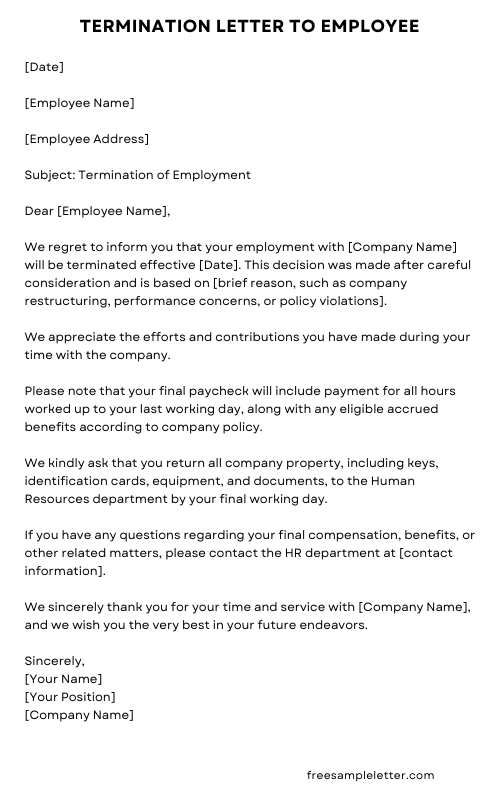
Here is a perfect example of a termination letter to an employee:
[Date]
[Employee Name]
[Employee Address]
Subject: Termination of Employment
Dear [Employee Name],
We regret to inform you that your employment with [Company Name] will be terminated effective [Date]. This decision was made after careful consideration and is based on [brief reason, such as company restructuring, performance concerns, or policy violations].
We appreciate the efforts and contributions you have made during your time with the company.
Please note that your final paycheck will include payment for all hours worked up to your last working day, along with any eligible accrued benefits according to company policy.
We kindly ask that you return all company property, including keys, identification cards, equipment, and documents, to the Human Resources department by your final working day.
If you have any questions regarding your final compensation, benefits, or other related matters, please contact the HR department at [contact information].
We sincerely thank you for your time and service with [Company Name], and we wish you the very best in your future endeavors.
Sincerely,
[Your Name]
[Your Position]
[Company Name]
How To Write a Termination Letter to an Employee
Writing a termination letter can feel uncomfortable. No employer enjoys ending someone’s job. However, a clear and respectful letter protects both the company and the employee. It provides written documentation of the decision and ensures the message is delivered professionally. A poorly written letter can create confusion, conflict, or even legal problems, while a well-structured one keeps the process calm and organized.
When handled correctly, a termination letter communicates the decision directly, explains the next steps, and maintains dignity for the employee. The goal is not only to end employment but to do it in a way that remains fair, respectful, and professional.
Understand the Purpose of a Termination Letter
A termination letter to employee is an official document that confirms the end of employment. It acts as a formal record for both the employer and the employee. In many workplaces, verbal discussions happen first, but the letter ensures everything is documented clearly.
The letter should explain the termination decision in simple language. It also includes key details such as the final working day, the reason for termination if appropriate, and instructions regarding company property or benefits. When written properly, the document reduces misunderstandings and protects the organization from future disputes.
Include the Essential Information
A strong termination letter always contains certain important details. Missing information can create confusion and unnecessary follow-up questions.
Start with the employee’s name, job title, and the company name. Then clearly state that the employment is ending and include the exact termination date. If necessary, briefly mention the reason for termination, such as company restructuring, policy violations, or performance issues.
The letter should also mention final paycheck details, unused vacation payments if applicable, and instructions for returning company property. Including this information keeps the process transparent and professional.
Maintain a Professional and Respectful Tone
Ending someone’s job is a serious matter. The tone of the letter must remain calm, respectful, and professional at all times. Harsh or emotional language can damage the company’s reputation and make a difficult situation even worse.
Use clear and direct sentences. Avoid unnecessary criticism or negative wording. The purpose of the letter is to communicate a decision, not to argue or assign blame. A respectful tone shows professionalism and preserves dignity for the employee who is leaving.
A simple and polite closing message can make a big difference. Wishing the employee success in their future career is often considered a thoughtful gesture.
Explain the Next Steps Clearly
A termination letter should guide the employee on what happens next. Many people feel uncertain after receiving such news, so clear instructions are extremely helpful.
The letter can explain how and when the final salary will be paid. It may also include details about benefits, unused leave, or health coverage if applicable. In addition, mention the process for returning company equipment such as laptops, ID cards, or documents.
Providing contact information for the human resources department is also useful. This allows the employee to ask questions about payroll, benefits, or paperwork after their departure.
Review the Letter Before Sending
Before delivering the termination letter, it should always be reviewed carefully. Small mistakes in wording, dates, or details can cause unnecessary problems later.
Check that the employee’s name, job title, and termination date are correct. Make sure the message is clear and free from emotional language. Many companies also have HR or legal departments review termination letters to ensure they follow company policies and local employment laws.
A well-reviewed letter reflects professionalism. It shows that the company takes the process seriously and respects both legal requirements and workplace standards.
FAQS
What essential information must be included in a termination letter to employee?
A professional termination letter must clearly state the employee’s name, their position, and the effective date of the termination. It should specify whether the separation is “for cause” or “without cause” and outline the status of final compensation, including earned wages, accrued vacation time, and any severance packages.
Additionally, it should provide instructions regarding the return of company property and the status of employee benefits like insurance or retirement accounts.
Is it legally required to provide a reason for the termination in the letter?
In many jurisdictions, specifically under “at-will” employment, an employer is not always legally required to provide a specific reason for termination. However, providing a clear, documented reason—such as restructuring, performance issues, or a violation of company policy—is highly recommended.
This transparency helps the employee understand the decision and serves as a vital piece of evidence for the company in the event of a future legal dispute or unemployment claim.
How should the tone of a termination letter to employee be handled?
The tone should be strictly professional, neutral, and direct. While it is important to be respectful, the letter is a formal legal document and should avoid overly emotional language or personal apologies that could be misinterpreted in a legal context.
The goal is to provide a clear and firm communication of the company’s decision while maintaining the individual’s dignity during a difficult transition.
Should the letter mention the details of the final paycheck?
Yes, the letter should explicitly detail the arrangements for the final paycheck to ensure compliance with state and federal labor laws. It should mention the total amount due, any deductions, and the date the employee can expect to receive the payment.
If the payment is being hand-delivered at the termination meeting or sent via certified mail, those details should be clearly documented to avoid any confusion regarding the settlement of accounts.
What are the best practices for delivering a termination letter?
A termination letter is best delivered in person during a private meeting between the employee, their direct supervisor, and a representative from Human Resources. This allows the employer to explain the contents of the letter and answer immediate logistical questions.
If an in-person meeting is not possible, the letter should be sent via a trackable delivery method, such as certified mail with a return receipt requested, to ensure there is a verified record of the employee receiving the notice.
Related:
Free Restaurant Complaint Letter Sample
